To choose a video production company in San Antonio, ask five questions before you look at a price: who decides what you say, where they film, who gets you comfortable on camera, what lands each month and when, and what happens after the files arrive. The right company has clear answers to all five. If you need one video, a freelancer may fit. If you need video every month, pick a team that plans, films and edits on a schedule.
San Antonio has plenty of good shooters. The hard part is picking one that fits how your business actually sells. This guide gives you a simple scorecard to compare them, built from how my team runs shoots across the city. If you want the bigger picture first, our guide on turning one filming session into a month of content shows the full process.
What should a small business look for in a video production company?
Look for a company that plans the message, not just the camera work. Most small businesses don't struggle with lighting. They struggle with knowing what to say and keeping video coming after the first project ends.
There are two kinds of video work, and it helps to know which one you're buying:
- Project video. One brand film, one launch video, one event recap. You pay for a finished piece.
- Ongoing video. A steady flow of short clips and stories for social media, ads and your website. You pay for a system that keeps running.
Hiring a project shop for ongoing work is like hiring a wedding caterer to cook your family dinner every night. They're great at the big day. They aren't set up for Tuesday.
Quality still matters a lot. In Wyzowl's survey of 205 marketers and consumers in late 2024, 91% of people said video quality affects how much they trust a brand. So the question isn't whether to look good. It's how to look good every month without it eating your calendar.
How do you compare video production companies? (The Five-Question Scorecard)
Ask every company the same five questions and score each answer 0, 1 or 2. Add them up. A score of 8 to 10 is a strong fit for ongoing video, 5 to 7 means ask more questions, and under 5 usually means a project shop. The five questions follow how my team runs every monthly shoot: plan the message, film on location, coach, deliver on a clock, then post.
| Question | 0 points | 1 point | 2 points |
|---|---|---|---|
| 1. Who decides what I say? | "That's up to you" | They'll review your script | They plan topics from your buyers' questions and write the scripts |
| 2. Where do you film? | Only in their studio | Wherever, if you arrange it | At your location, where customers would meet you |
| 3. Who gets me comfortable on camera? | Nobody mentions it | "You'll do great" | A guided interview, a teleprompter and coaching in real time |
| 4. What lands, and when? | "We'll send files when they're ready" | A rough list | A written list of deliverables and a delivery clock |
| 5. What happens after delivery? | You're on your own | Files plus tips | They post, run ads on what works and track it to booked calls, or hand you files you own outright |
Question 1 matters most. A company that says "just tell us what you want" is handing the hardest part back to you. On our shoots, we write the scripts and run a guided interview, so the owner answers questions the way they would on a sales call.
Why question 3 is the one people skip
Most owners don't love being on camera. The fix isn't more takes. It's someone asking you good questions so you forget the lens is there. If a company can't explain how they'll do that, expect a long, stiff shoot.
Should you film in a studio or at your business?
Film at your business if you want buyers to trust you. Your office, shop or job site shows people exactly what they'll walk into. A studio looks clean but could belong to anyone.
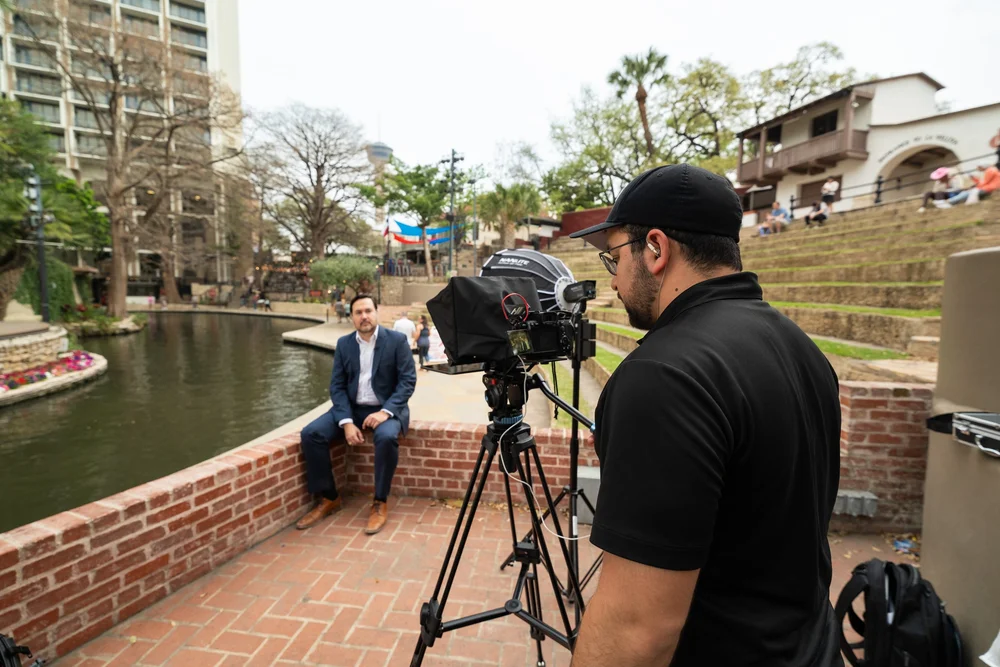
That's why we film at our clients' locations. In San Antonio we've filmed clients along the River Walk, and for the Tacos & Tequila festival at Retama Park in Selma, just north of the city, I ran video while two of our photographers covered the day from early afternoon to the end of the night. A real place gives you the extra shots, called B-roll, that make short clips feel alive: hands at work, the front door, your team mid-conversation.
It also helps your Google Business Profile. Google accepts profile videos up to 30 seconds long, up to 75 MB, at 720p or higher, and short clips of your actual space are the easiest thing to put there.
How much of your time should a shoot take?
Expect a few hours a month, not a few days. With our content creation clients, the filming session is about 3 to 4 hours, and the owner's total time is about 3 to 5 hours a month, including reviewing the edits.
Ask any company these three timing questions:
- How soon can we shoot? Most of our clients schedule their first shoot within 10 days of onboarding.
- How long until I have the edits? Ours are delivered within 14 business days.
- What happens next month? If the answer is "call us when you need something," that's a project shop. Ongoing video needs a standing date.
Steal this: run the scorecard on your next three calls
Before you talk to any San Antonio video company, copy the five questions into your notes. Ask each one word for word, write down the answer, and score it right after the call. Comparing three companies takes three short calls, and you'll know who fits before anyone sends a proposal.
- Who decides what I say on camera?
- Where do you film, and can it be at my business?
- How do you get people comfortable on camera?
- What do I get each month, and by when?
- What happens after you deliver the files, and who owns them?
If you're also weighing an agency against a freelancer or an in-house hire, our comparison of social media agency vs freelancer vs in-house covers the trade-offs. And if you're curious why showing your real face matters so much, read how to build trust with potential customers online.
Common questions about choosing a video production company in San Antonio
What's the difference between a video production company and a videographer?
A videographer usually films and hands you the footage. A video production company plans the message, films, edits and delivers finished videos on a schedule. If you need someone to decide what to say and keep video coming every month, look for a company, not just a camera.
Should I hire a freelancer or a company for monthly video?
For one video, a freelancer can be a great fit. For monthly video, a company with a plan, a shoot schedule and a delivery clock is easier, because you aren't the one managing the editor, the deadlines and what to film next.
Do I have to be on camera?
It helps, because buyers want to meet who they'll be working with. You don't need to be a natural. A guided interview with a teleprompter, where someone asks the questions and coaches you in real time, gets you there. You answer like you would on a sales call, in your own words.
How long does a business video shoot take?
For a month of content, plan on one session of about 3 to 4 hours at your location. With our clients, total owner time is about 3 to 5 hours a month, and the edits are delivered within 14 business days.
If you're comparing local options, here's how we work as a video production company in San Antonio.
P.S. If you'd rather have a team run this for you, schedule a 1-on-1 intro call and I'll map out how it fits your business. One media session = 30 days of content.