Video marketing for small business means filming short videos of you, your team and your place, posting them every week, and using the best ones to get the right people to book a call with you. It works when it's steady. The business that shows up on camera every week builds trust before the first call, while the one that posts in bursts starts over each time. For most owners, that steady rhythm can come from one filming session a month.
Think of video like a radio station. Nobody tunes in to a station that only plays on the weekends you have free. The signal has to be on every day, and then people start to rely on it. The rest of this guide shows how to keep the signal on without living on camera, and how to tie it to the number that pays your bills: booked calls. If you'd rather hand it off, our social media management plan is social media handled, with you on camera once a month.
What is video marketing for a small business?
It's using video to answer the questions buyers have before they call you, and putting those answers where buyers already look: Instagram, Facebook, YouTube, Google and your own website. The goal isn't fame. The goal is a calendar with qualified calls on it.
For a law firm, that might be a short clip on what to do right after a car crash. For a med spa, a provider explaining what a treatment feels like. For a home services company, the owner walking through a finished job. Each one does a small piece of the selling before anyone picks up the phone.
There are three kinds of video worth making, and most small businesses only make one:
- Reach videos. Short clips that help strangers find you.
- Trust videos. Proof, stories and answers that make a stranger believe you.
- Booking videos. The clips on your booking page and in your follow-up that get people to the call, and get them to show up.
Why does video work when you sell through a booked call?
Because a booked call is a leap of faith, and video shrinks the leap. Before someone gives you 30 minutes of their day, they want to know who they'll be talking to. Video lets them meet you first.
The numbers point the same way. In Wyzowl's survey of 205 marketers and consumers in late 2024, 87% of people said they'd been convinced to buy a product or service by watching a video, and 91% said video quality affects how much they trust a brand. The same survey found 89% of businesses already use video as a marketing tool. And nearly everyone carries the screen your video plays on: 91% of U.S. adults own a smartphone, according to Pew Research Center's 2024 survey.
Small businesses are moving too. LocaliQ's survey of more than 730 small business owners and marketers for its 2025 trends report found that nearly 60% had tried short-form video, and 47% planned to invest more in search advertising and video marketing.
Here's the part those surveys can't tell you. A business that sells through calls doesn't need millions of views. It needs the right few hundred people to see the same face often enough to feel like they already know it. That's also why video helps so much when referrals slow down: it does the introduction a happy client used to do for you.
Why does small business video usually stall? (The Busy Season Trap)
Small business video usually stalls because it only happens when the owner has time. When work is slow, you film. When work picks up, filming stops. Two months later the leads dry up, you have time again, and the cycle repeats. We call it the Busy Season Trap.
IllustrationThe Busy Season Trap: video that only happens in slow months makes the slow months come back.
The enemy isn't your camera skills or your editing app. It's inconsistency. A feed that goes quiet for six weeks tells a buyer one of two things: you're out of business, or you're too busy to care. Neither one books a call.
The fix is to take video off the owner's to-do list and put it on a calendar that runs whether you're busy or not. That's the whole idea behind filming once a month, which we cover below.
Which videos turn into booked calls? (The Booked-Call Video Ladder)
The videos that book calls are the ones that move a stranger up four rungs: find you, trust you, book with you, then show up. We built the Booked-Call Video Ladder from how my team plans each client's month, and every video we make has one rung as its job.
| Rung | The viewer's question | Video that answers it | Where it lives |
|---|---|---|---|
| 1. Find | "Who is this?" | Short answers to common questions, quick tips, behind-the-scenes clips | Reels, TikTok, YouTube Shorts, Meta ads |
| 2. Trust | "Can they do it for me?" | Client stories, before-and-afters, a brand story, you explaining how you work | YouTube, your website, Google Business Profile |
| 3. Book | "Is the call worth my time?" | Who the call is for, what happens on it, one proof point | Your booking page and ads to warm viewers |
| 4. Show | "Should I still go?" | A short welcome clip and a "what to bring" reminder | Your confirmation page, emails and texts |
Most small businesses stop at rung one. They post tips, get some views and wonder why the calendar stays empty. The top two rungs are where the calls are won, and they're the cheapest to make, because the same few clips run for months.
Rung two is where most trust gets built. If you want ideas for it, our post on building trust with potential customers online goes deeper. Happy clients make the best trust videos, and the same ask that gets you a referral can get you a short on-camera story. Here's how to ask customers for referrals without being pushy.
Rungs three and four are where I spend the most time with owners. On my show, the AI Content Marketing Academy, I put it this way:
The booking isn't the win. The show is.
Esai Salinas, AI Content Marketing Academy, Episode 23 (October 2026)
We've had our own calls booked and then missed, so this one comes from experience. Right after someone books, they start second-guessing: is this the right call, are they going to sell me something? A short video on your confirmation page that says who the call is for, what will happen on it and what to bring answers those questions before they turn into a no-show.
How do you film a month of video in one session?
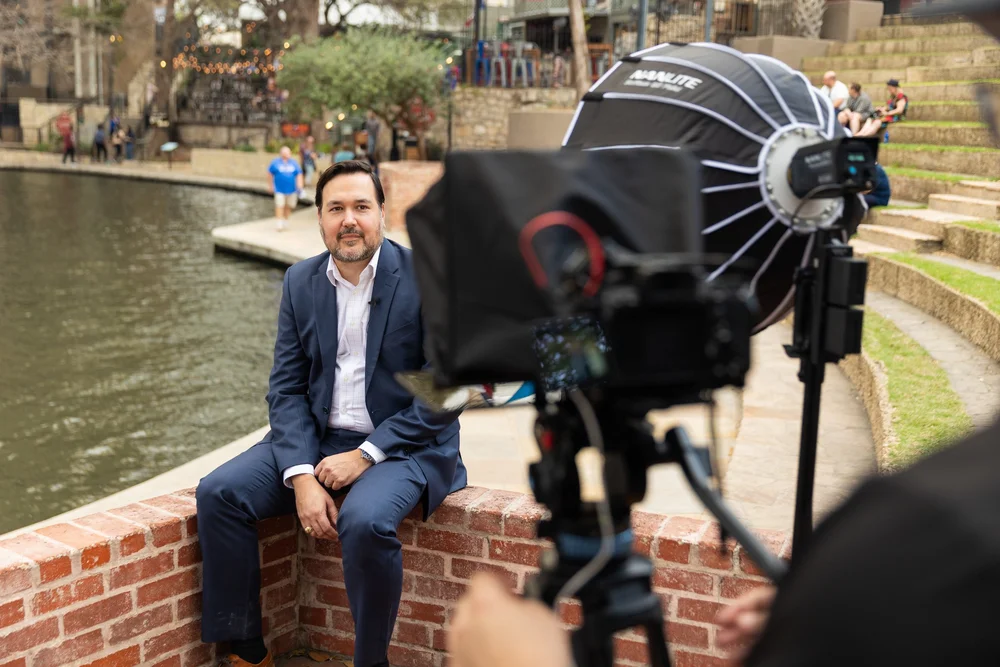
You plan the topics first, film them all in one sitting at your location, and let an editor cut them into a month of posts. One session of about 3 to 4 hours can cover 30 days of content. That's the core of how we run content creation: one media session = 30 days of content.
How one filming session turns into a month of video and, over time, booked calls.
A few things make one session work:
- Questions, not scripts, for most clips. We run a guided interview and ask the questions your buyers ask. You answer like you would on a sales call. It sounds like you because it is you.
- Film where your customers would meet you. Your office, your shop, your job site. A real place does trust work a stock photo never can.
- Batch the backgrounds. Shoot all the sit-down answers in one spot, then move once for walk-and-talk clips and B-roll (the extra shots of your team and place that cover cuts).
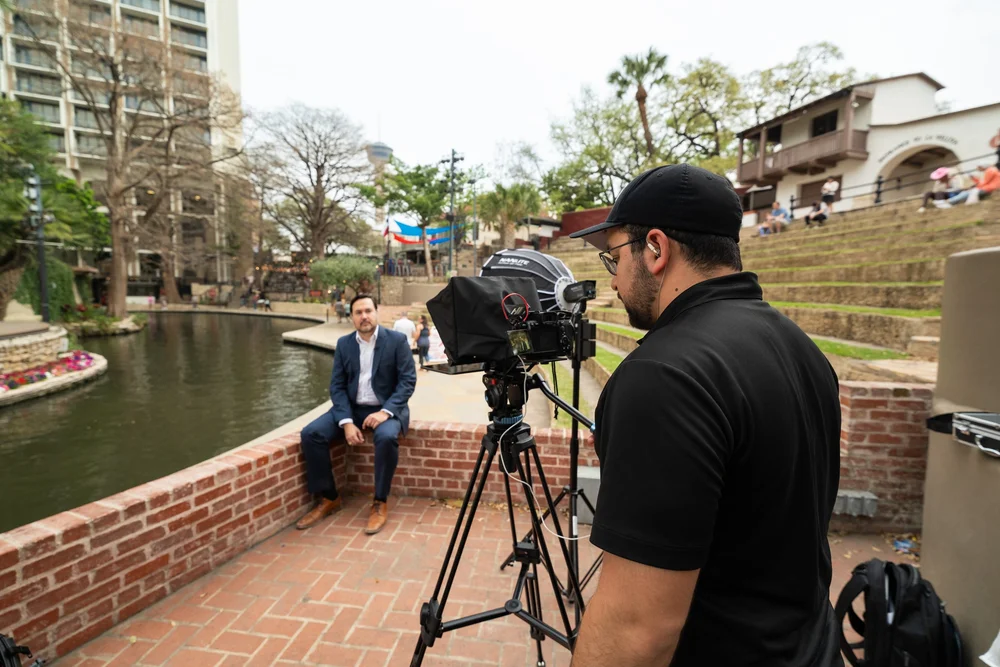
With our clients, most schedule their first shoot within 10 days of onboarding, content is delivered within 14 business days, and the owner's total time is about 3 to 5 hours a month. If you want the step-by-step version, our guide on how to create a month of content in one day walks through the full shoot.
Where should a small business post its videos?
Post short vertical clips on Instagram, Facebook and YouTube Shorts for reach, longer stories on YouTube and your website for trust, and your booking videos on the pages people see right before and after they book. Each place has a different job.
| Where | Best for | What to post |
|---|---|---|
| Instagram and Facebook Reels | Rung 1: find | Short answers and tips, filmed vertical |
| YouTube Shorts | Rung 1: find | The same short clips, posted daily if you can |
| YouTube (long form) | Rung 2: trust | A brand story, client stories, longer answers |
| Google Business Profile | Rung 2: trust | Short clips of your place and team; Google allows videos up to 30 seconds, up to 75 MB, at 720p or higher |
| Your booking and confirmation pages | Rungs 3 and 4 | Who the call is for, what happens on it, what to bring |
| Email and text follow-up | Rung 4 and old leads | A short personal clip from you |
Don't skip the last row. A quick video in a follow-up email is one of the easiest ways to wake up an old lead. We wrote a simple weekly system for following up with old leads, and a guide to nurturing leads without doing it all yourself.
Should you put ad money behind your videos?
Yes, once you know which videos people already like. Posting organically is how you find the winners. Ads are how you make sure the right people in your area see them more than once.
Think of organic posts as a taste test and ads as stocking the shelf. You don't fill a store with a flavor nobody tried. You watch which clips get watched to the end, saved and shared, then put money behind those. With our social media management clients, new ads go live within 7 business days of filming.
Paid search can work too. I made my first million with Google search ads: $80,000 of our own Google ad spend turned into over $1M in sales. That's a house result for OneAway, not a client's. What I learned is that ads find the buyer, but the buyer still checks you out before they call. Video is what they find when they do.
How do you track video to booked calls, not views?
Track every step from view to booked call to showed call, and judge your videos by the calls they lead to. Views tell you a clip was seen. Booked and showed calls tell you it worked.
Here's the short version of what we set up:
- One booking link per channel. Use a different link (or a tracking tag on the link) for Instagram, YouTube, ads and email, so you can see where each booking came from.
- Ask on the form. Add "How did you hear about us?" to your booking form. People will often name the exact video.
- Send the show back to the ad platform. Ad platforms optimize for what they can see. If your ads only report bookings, they'll find people who book. If they also see who showed up, they'll look for people who show.
- Look at it weekly. Which videos led to calls this week? Make more like those.
If your calls book but don't show, start with our post on call funnel mistakes and the three fixes that get more booked calls.
What results can video marketing bring?
Steady video can grow your audience fast, but results depend on your offer, your market and how long you keep going. Here are real numbers from our own work, with the context that matters.
Ryley Hall, an artist and personal brand who is a paid client of ours, had 600,000 total views in 2024. In 2025 she had 3,413,015 views in 90 days, about 6 times the full prior year in one quarter. A restaurant client has passed 1.1M organic views since April 2026.
Our own YouTube channel is the cleanest test, because nothing else changed. We filmed one session and posted one short a day.
None of these numbers are typical, and none are promises. They show what happens when the signal stays on.
Who should make your videos: you, a freelancer or a team?
Pick based on your time, not just your budget. Doing it yourself costs hours, a freelancer costs management, and a team costs the most per month but the least of your attention.
| Option | What you handle | Best for |
|---|---|---|
| Do it yourself | Planning, filming, editing, posting, tracking | Early businesses with more time than money |
| Freelance videographer | Planning, what to say, finding an editor, posting, deadlines | One-off projects, or owners who like managing creative |
| In-house team | Hiring and managing several roles | Larger companies with steady volume |
| Done-for-you team | About 3 to 5 hours a month on camera and reviewing | Owners who want it to run without them |
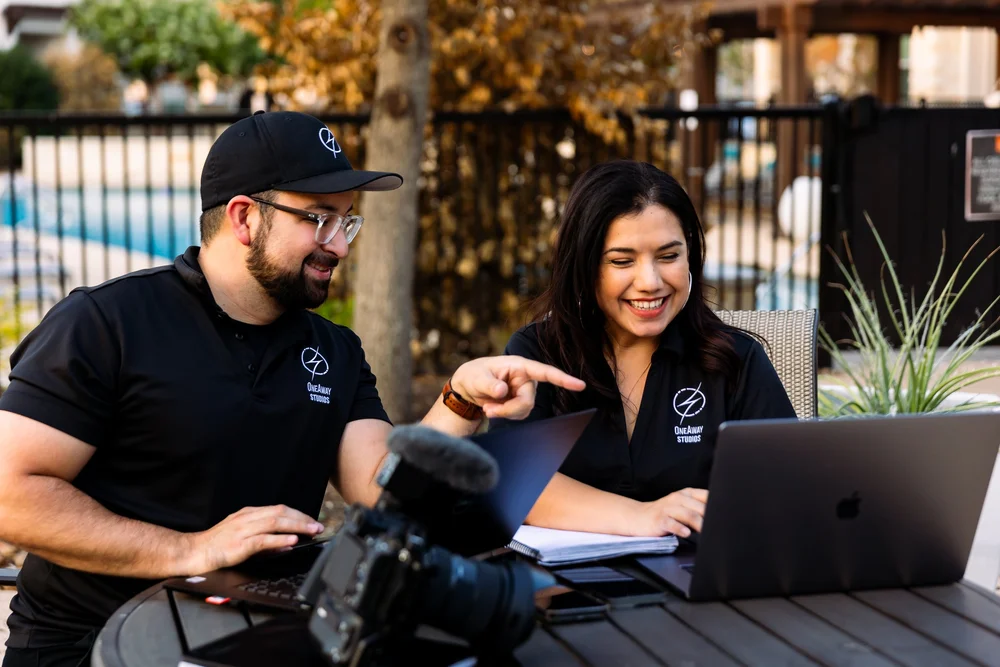
To build the whole thing in-house, you'd hire five people: a strategist, a videographer, an editor, a social media manager and a media buyer. That's about $350,000 a year in payroll. For a deeper comparison, see social media agency vs freelancer vs in-house.
Steal this: the three-question week
Open your notes from your last ten sales calls and write down the three questions people ask most. This week, film a 30 to 60 second answer to each one on your phone, in your own space, and post one every other day. Then put the best one on your booking page. You'll have climbed all four rungs of the Booked-Call Video Ladder with three clips.
- Three questions from real sales calls
- A quiet spot with light facing you, not behind you
- Phone held vertical at eye level
- One answer per clip, under a minute
- Captions on, so the clip still works with the sound off
- The best clip added to your booking or confirmation page
Common questions about video marketing for small business
How often should a small business post videos?
Often enough that you never go quiet. A few short videos a week is a strong rhythm for most small businesses. Consistency matters more than volume, because the Busy Season Trap starts the moment posting stops. Filming a month at a time is how most owners keep it steady.
What kind of videos work best for small businesses?
Short clips that answer the questions buyers already ask on your sales calls. Add client stories and a short brand story for trust, and a quick video on your booking page that says who the call is for and what happens on it.
Do I need to be on camera?
It helps a lot, because buyers want to meet the person they'll call. You don't need to be a natural. A guided interview, where someone asks you questions and you answer like you would on a call, sounds like you without a script to memorize.
How long until video marketing brings in booked calls?
It depends on your offer, your market and how steady you are. Plan on months, not weeks. Track booked and showed calls from day one so you can see which videos are working and make more of them. Keep the signal steady while you wait.
Next, read our guide to social media management for Texas businesses to see how posting and ads fit around your videos.
P.S. If you'd rather have a team run this for you, schedule a 1-on-1 intro call and I'll map out how it fits your business.